
Atami Onsen Guide: Town, Souvenirs and Bathing Rules
Conditions are checked against official sources, and each place shows its check date. How we check
Atami Onsen is a hot spring area in Atami, Shizuoka. According to the City of Atami, it has more than 500 sources in total, about 90% of them are high-temperature springs of 42 degrees C or more, and the average temperature is about 63 degrees C. According to the origin record, Atami Onsen began in 749, when the priest Mangan Shonin of Hakone Gongen led the hot spring to the present site of the "Oyu Geyser" and built Yuzen Shrine as its guardian deity. Records show that Tokugawa Ieyasu visited Atami in 1604 for a hot spring cure. The self-flowing springs known as the "Atami Nanayu (Seven Springs of Atami)" are said to have played an important part in the history of Atami Onsen.
- Facilities
- 11 places
- Tattoo-friendly
- 4
- Private baths
- 5
- Spring types
- Salt spring (chloride spring), Sulfate spring, Simple spring
Facilities
✓ yes · △ with conditions · ✕ no · ? not checked
- Day-use onsen · AtamiOcean Spa FuuaAdults ¥3,080
- No tattoos
- No private bath
- Day visits OK
- Ryokan · AtamiYu no Yado HiratsuruAdults ¥1,100
- Tattoos with conditions
- Private bath
- Day visits OK
- Ryokan · AtamiSyukaen YunohanazenAdults ¥2,350
- Tattoos with conditions
- No private bath
- Day visits OK
- Hotel · AtamiKKR Hotel AtamiAdults ¥1,800
- No tattoos
- Private bath: not checked
- Day visits OK
- Day-use onsen · AtamiMarine Spa AtamiAdults ¥1,010
- Tattoos with conditions
- Private bath: not checked
- Day visits OK
- Hotel · AtamiHotel New AkaoAdults ¥2,500
- Tattoos: not checked
- Private bath
- Day visits OK
- Hotel · AtamiHotel Oonoya
- Tattoos with conditions
- Private bath
- Day visits: not checked
- Hotel · AtamiAtami Onsen Hotel YumeirohaAdults ¥1,000
- Tattoos: not checked
- Private bath
- Day visits OK
- Ryokan · AtamiYuyado IchibanchiAdults ¥1,600
- Tattoos: not checked
- Private bath
- Day visits OK
- Public bath · AtamiAtami Ekimae Onsen Public Bath (Tawara Yokujo)Adults ¥500
- Tattoos: not checked
- Private bath: not checked
- Day visits OK
- Ryokan · AtamiFuruya Ryokan
- Tattoos: not checked
- No private bath
- Day visits: not checked
Around the onsen town
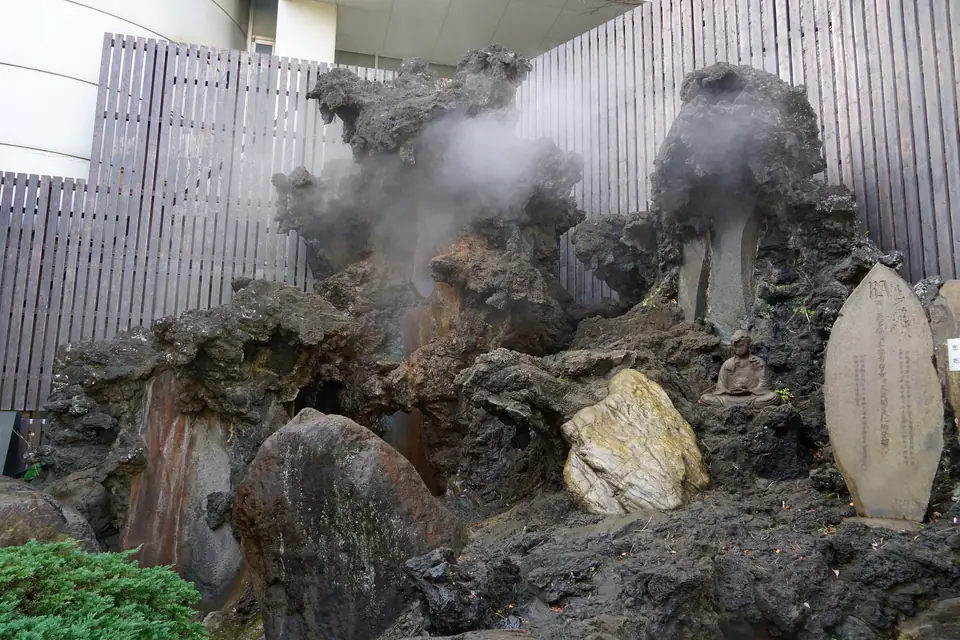
Photo: 663highland / CC BY-SA 4.0 Oyu Geyser (Atami Nanayu)
One of the Atami Nanayu (Seven Springs of Atami). A self-flowing spring once counted among the three great geysers of the world, it was redeveloped in 1962 (Showa 37) as an artificially erupting geyser and is preserved as a cultural property of the city. It is not a bathing facility. According to the City of Atami, the geyser is suspended from the evening of November 30, 2026 to December 16 for repairs to the board fence.
Official websiteYuzen Shrine
Described as founded in 749 (the first year of Tenpyo-shoho), it is the shrine of the god of Atami's hot springs. In front of the shrine wells up the Oyu, regarded as the source of Atami Onsen, and the geyser is also a popular sight.
Official website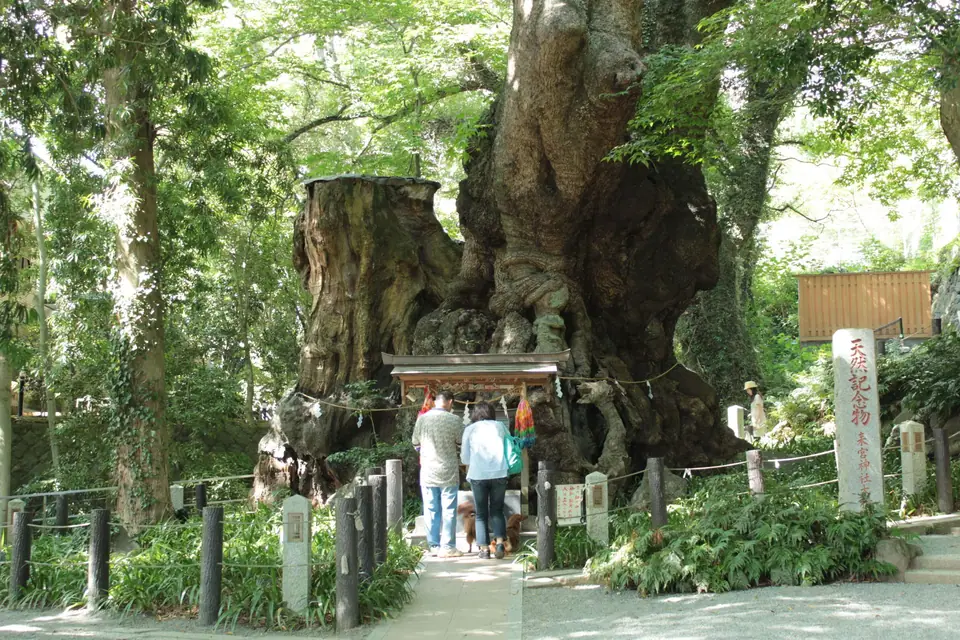
Photo: Batholith / Public domain Kinomiya Shrine
A shrine with a sacred great camphor tree, about 2,100 years old and designated a national natural monument, beside the main hall. It is lit up at night. From JR Atami Station, take a bus bound for Motohakone or Nishiyama for about 15 minutes and get off at "Kinomiya Jinja-mae."
Official website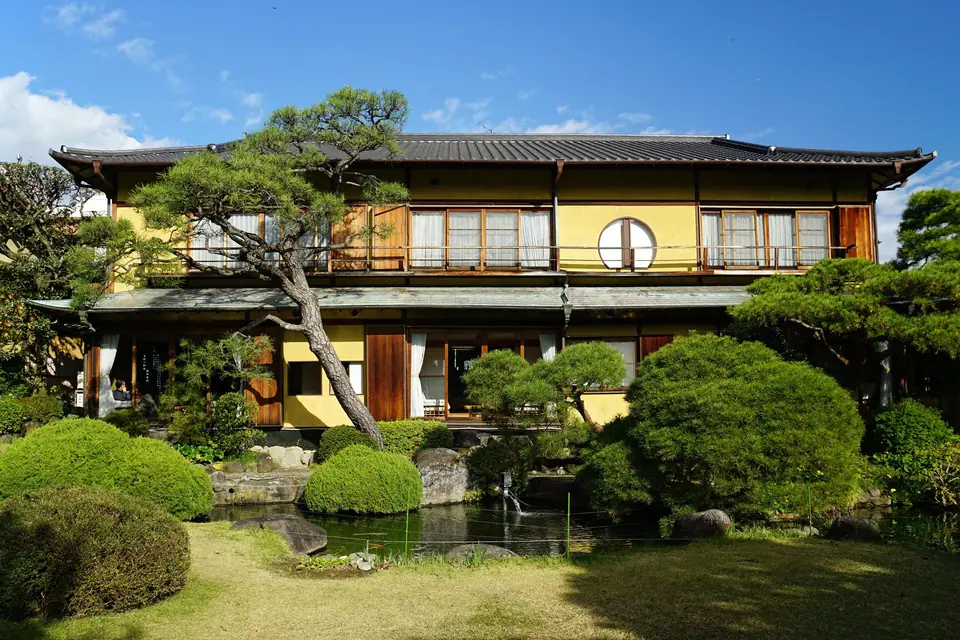
Photo: 663highland / CC BY-SA 4.0 Kiunkaku
A fine residence built as a villa in 1919 (Taisho 8) and turned into a ryokan in 1947. Loved by famous writers, it is now open to the public as a cultural property of Atami City. It is closed on Wednesdays (open if Wednesday is a national holiday) and on other days.
Official website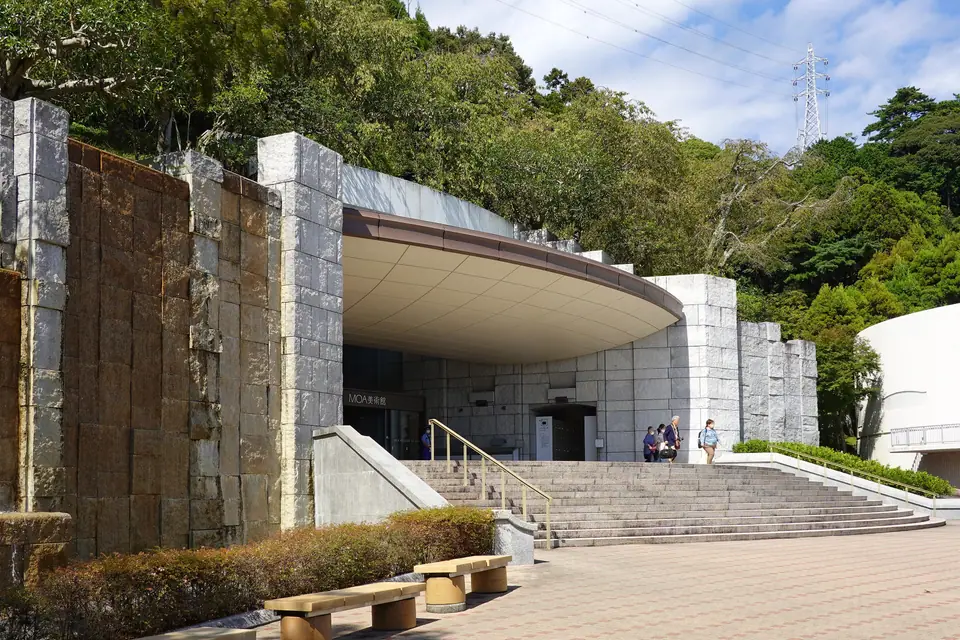
Photo: 663highland / CC BY-SA 4.0 MOA Museum of Art
Atami's leading art museum, which holds about 3,500 works, including 3 National Treasures and 67 Important Cultural Properties, centered on Oriental paintings, calligraphy and crafts. It stands on high ground and also offers views of Izu-Oshima and Hatsushima. About 10 minutes by bus from JR Atami Station.
Official website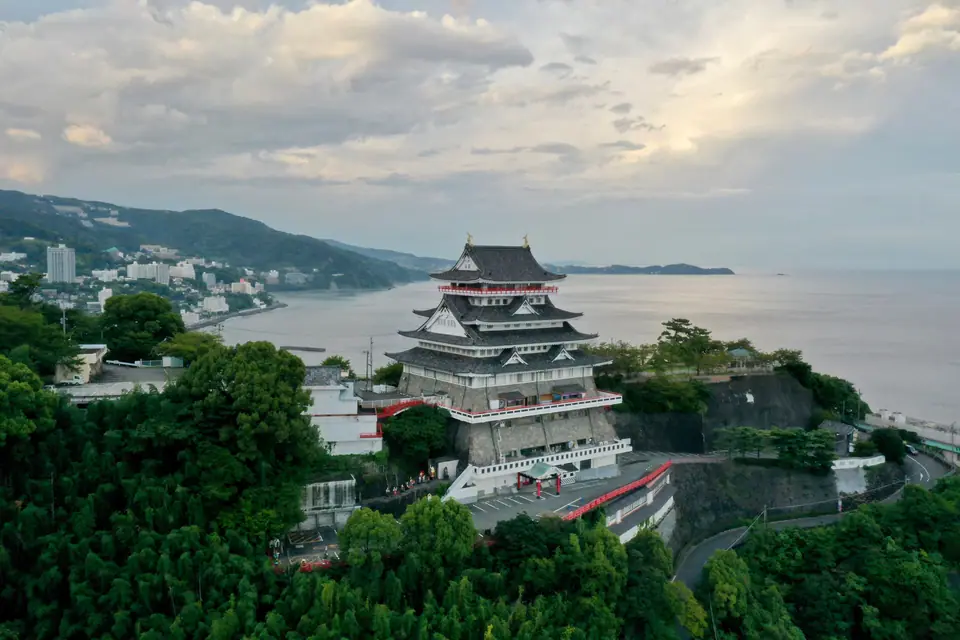
Photo: Charlie fong / CC BY-SA 4.0 Atami Castle
A castle on the summit of Nishikigaura. From the observation deck of the castle tower you can see Atami town, Hatsushima, Oshima and more in 360 degrees. Inside the castle there is also a jet footbath 120 m above sea level. About 10 minutes by car from JR Atami Station, or use the Atami Ropeway.
Official website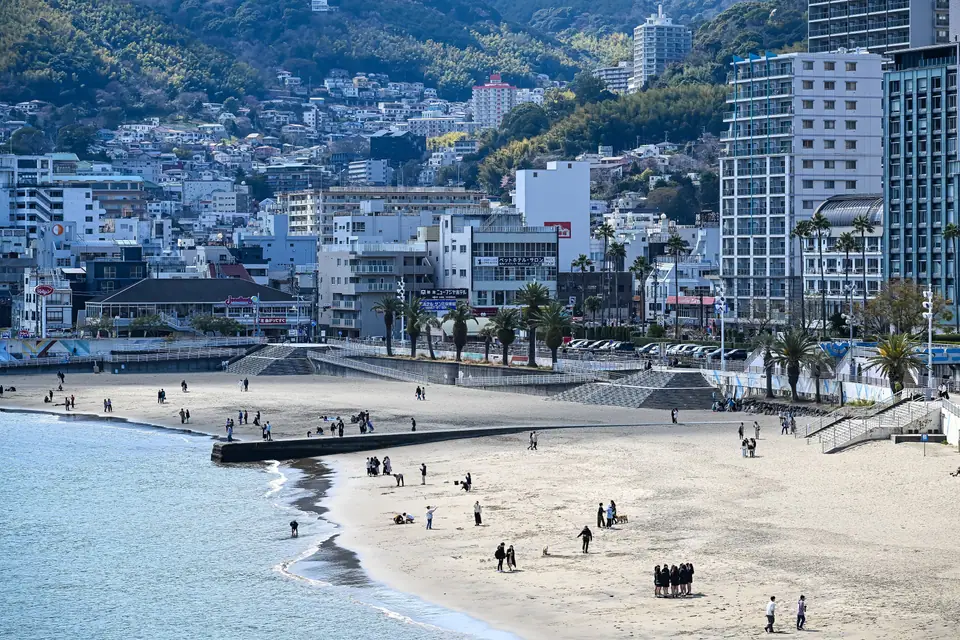
Photo: m-louis .® / CC BY-SA 2.0 Atami Sun Beach
A resort-style beach lined with palm trees. At night you can enjoy Japan's first beach lighting, created by Motoko Ishii.
Official websiteShinsui Park and Moon Terrace
A seaside park that continues south from Sun Beach, developed with the image of a resort town on the northern Mediterranean. It is popular as a place for walks and commemorative photos.
Official website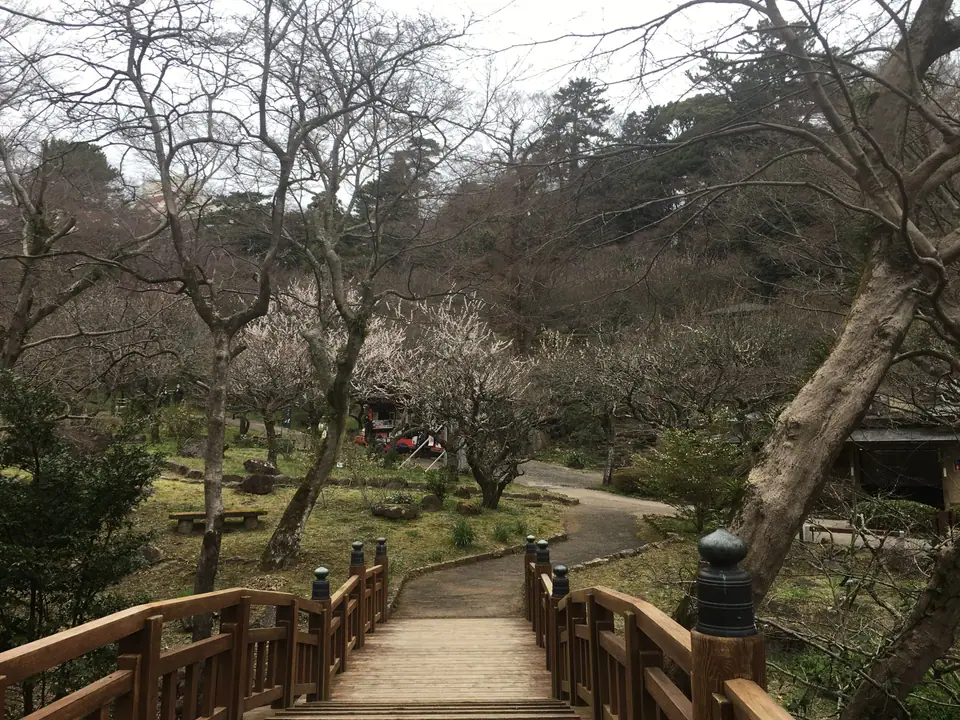
Photo: Nesnad / CC BY 4.0 Atami Plum Garden
Opened in 1886 (Meiji 19). Said to have Japan's earliest-blooming plums and its latest autumn leaves. In 2026 the Maple Festival runs from November 14 to December 6, and the 83rd Plum Festival from January 9 to March 7, 2027 (8:30-16:00).
Official websiteAtami Station shopping streets (Nakamise and Heiwa-dori)
Two shopping streets in front of Atami Station, "Heiwa-dori" and "Nakamise." Restaurants, cafes, sushi shops, dried fish shops and shops selling Izu Peninsula souvenirs line the streets, and you can eat hot spring manju as you stroll.
Official websiteIeyasu no Yu Footbath
A natural hot spring footbath in front of Atami Station. Hours are given as 9:00 am to 4:00 pm (it may close for maintenance or bad weather; it reopens on September 1, 2026). According to the City of Atami, the spring type is sodium, calcium, chloride and sulfate hot spring.
Official website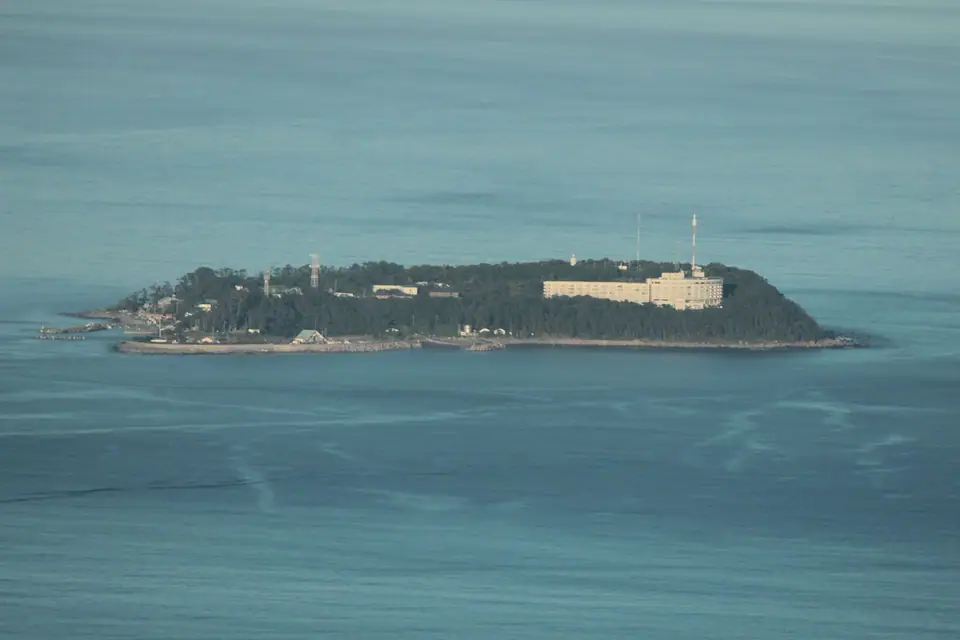
Photo: Batholith / Public domain Hatsushima Island
A small resort island with a circumference of 4 km, floating offshore about 30 minutes by high-speed boat from Atami Port. It is the only inhabited remote island in Shizuoka Prefecture and has a street of restaurants, Hatsuki Shrine, Hatsushima Lighthouse and more. High-speed boats leave from Atami Port (check the timetable on the high-speed boat page of the source). Service may be suspended depending on the weather.
Official website
Photo: Atsuya14d / CC BY-SA 4.0 Atami Seaside Fireworks Festival
A fireworks festival that began in 1952 (Showa 27) and is held more than 10 times a year. The remaining dates for fiscal 2026 are Sunday, December 6, Friday, December 25 and Sunday, February 21, 2027, 20:20-20:40, at Atami Bay, held even in rain (dates and times are planned). Viewing is along the whole shoreline from Sun Beach to Atami Port and elsewhere.
Official website


Go a little further
Places within 20 km of Atami, nearest first, from our sister sites.
- Sake TabiKaze no Tani Beer (Dairy Kingdom Oratche)about 6 km
- J-TRIP PortalYamanaka Castle Ruinsabout 10 km
- J-TRIP PortalMishima Skywalkabout 10 km
- J-TRIP PortalHatsushima Lighthouseabout 11 km
- Meiga no FurusatoThe Fifty-three Stations of the Tokaido: The Lake at Hakoneabout 11 km
- J-TRIP PortalHatajuku Yosegi Kaikanabout 13 km
- Sake TabiHansharo Beer (HANSHARO BEER STAND)about 13 km
- Meiga no FurusatoThirty-six Views of Mount Fuji: Lake Hakone in Sagami Provinceabout 14 km
- Sake TabiNakaizu Winery Hills (Chateau T.S)about 14 km
- Meiga no FurusatoThe Fifty-three Stations of the Tokaido: Morning Mist at Mishimaabout 15 km
- Sake Tabiféte Mishima Breweryabout 15 km
- Meiga no FurusatoThe Fifty-three Stations of the Tokaido: Sakawa River near Odawaraabout 19 km
Photos


Souvenirs
Neko no Shita (butter cookie)
A simple cookie made with plenty of fresh butter. The product name "Neko no Shita (cat's tongue)" is a direct translation of the French langue de chat, and it is introduced as a sweet loved for more than 60 years.
Where to buy Miki Seika (Nagisa-cho). Also sold at Atami Ekimae Daiichi Building 1F and at "Atami Collection A-PLUS" on the 1st floor of LASCA Atami
Shop page →Onsen Enmei Manju
A hot spring manju that uses Hokkaido red beans and Okinawan brown sugar and is described as made without preservatives. It is introduced as the taste of the shop where hot spring manju originated.
Where to buy Enmeido (Kamijuku-cho). Also sold at "Atami Collection A-PLUS" on the 1st floor of LASCA Atami
Abe Shoten Onsen Manju
A hot spring manju with a moist dough, made by turning domestic brown sugar and white refined sugar into syrup and using a minimum of wheat flour. The filling is made of Hokkaido red beans and is introduced as lightly sweet.
Where to buy Abe Shoten (Tawara-honcho)
Shop page →Atami Pudding
A smooth, creamy pudding made with local Tanna milk and steamed slowly. Besides caramel, there are flavors such as "strawberry" and "matcha."
Where to buy Atami Pudding (Tawara-honcho), JR Kinomiya Station store and others
Shop page →Daidai (bitter orange) marmalade
Marmalade made by hand from Atami-grown daidai (bitter oranges) by a certified Eco Farmer producer, without any additives. The daidai is introduced as an auspicious fruit, said to bring prosperity "from generation to generation."
Where to buy "Atami Collection A-PLUS" on the 1st floor of LASCA Atami (made by Daidai no Kurata-ke)
Tsurukichi Daidai Yokan
A sweet and slightly bitter daidai yokan made with 100% Atami-grown daidai.
Where to buy Tokiwagi Yokan-ten Sohonten (Ginza-cho). Also sold at "Atami Collection A-PLUS" on the 1st floor of LASCA Atami
Shop page →
Getting there
- Tokyo (Tokaido Shinkansen)By JR Tokaido Shinkansen from Tokyo Station to Atami Station, about 35 minutes by Hikari and about 50 minutes by Kodama (according to the Atami Onsen Hotel and Ryokan Cooperative; the English official site of the Atami Tourist Association gives Kodama as about 45 minutes from Tokyo, so the sources differ. Check the timetable).Source
- Tokyo / Shinjuku (JR local line / Odoriko)The Odoriko limited express takes about 80 to 100 minutes from Tokyo and Shinjuku to Atami depending on the train, and the JR Tokaido Line (local) runs directly from Tokyo in about 1 hour 50 minutes, with no reservation needed and a fare about half that of the Shinkansen (according to the English official site of the Atami Tourist Association. The Odoriko requires a reserved-seat limited express ticket, or an unreserved-seat ticket that specifies only the travel date and section; according to the JR East official FAQ).Source
- Haneda AirportTake the Keikyu Line to Shinagawa Station in about 15 minutes, then change to the Tokaido Shinkansen at Shinagawa Station (according to the English official site of the Atami Tourist Association. In that site's table, Shinagawa Station to Atami Station takes about 29 minutes by Hikari and about 38 minutes by Kodama. Only one place at the end of the same page gives Kodama as about 45 minutes, while the table and the Shinkansen section of the text say 38 minutes).Source
- Tokyo (by car)From Tokyo IC on the Tomei Expressway (about 40 km), from Atsugi IC on the Odawara-Atsugi Road and Seisho Bypass (about 45 km), and from Ishibashi IC on National Route 135 (about 20 km) to Atami. About 1 hour 30 minutes by car from Tokyo (according to the Atami Onsen Hotel and Ryokan Cooperative. The English official site of the Atami Tourist Association gives about 2 to 2.5 hours from central Tokyo via the Tomei Expressway and National Route 135, so it varies with the starting point and road conditions).Source
Rules are based on each facility's official information as of the date shown. They can change, so please check with the facility before you go.